
Attack Surface Monitoring
Continuous exposure management
see the organization the way an attacker does

Attackers See What Your Inventory Misses
Somewhere on the internet right now, a machine belonging to the organization is answering a request. It may be the marketing site. It may be a database a contractor stood up for a two-week test in 2022 and never switched off. The organization cannot tell the two apart, because the second one was never written down. Attackers do not consult inventories. They scan, and they find whatever answers.
The gap widens on its own. Cloud migrations create workloads outside the configuration management database, SaaS adoption spreads the application surface, and mergers bring in unknown subsidiaries and dormant domains. Each is a possible way in, and each is invisible to the tools most security teams already own.
None of them answer the question that matters: what does this organization look like to an attacker, right now?
Discovery Is Not the Hard Part
Anyone can produce a list of hosts that answer. The hard part is proving which of them the organization is responsible for.
A discovery engine sees hosts, certificates and names. It does not see contracts, subsidiaries or divestitures. A shared content-delivery address serves a thousand organizations, and a parked domain resembling the corporate brand may belong to a squatter. Any tool that treats resemblance as ownership sweeps them all in, and one wrong attribution in front of a board undoes ten right ones.
Attribution, not enumeration, is where an exposure program is won or lost, and it is where ClearSkies ASM puts its effort.
What separates ClearSkies ASM from an external scanner is what happens after the finding. ClearSkies ASM reports every finding to ClearSkies TDIR, where it is correlated with identity, endpoint and DNS signals, pre-investigated by the AI-SecOps Autonomous Analyst, and handed to a person as a triaged incident with an owner.
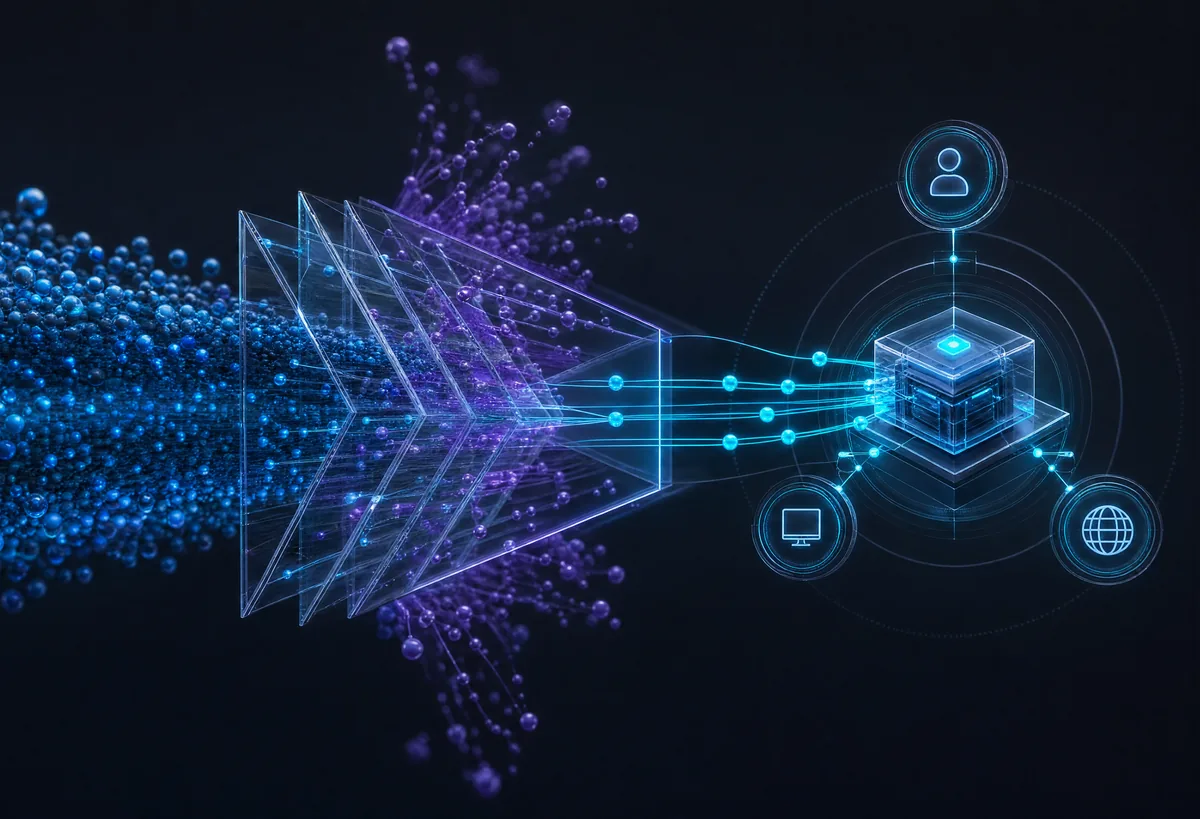
What Makes ClearSkies ASM Different
Discover Beyond the Inventory
Discovery runs from the authorized root domains outward, across Certificate Transparency, passive DNS, registration records, cloud object storage and internet-wide scan data, with no inventory to consult and no agent anywhere. A service that starts from a seed list finds what someone already thought to record, which is the opposite of the problem.
Prove Ownership Before Taking Action
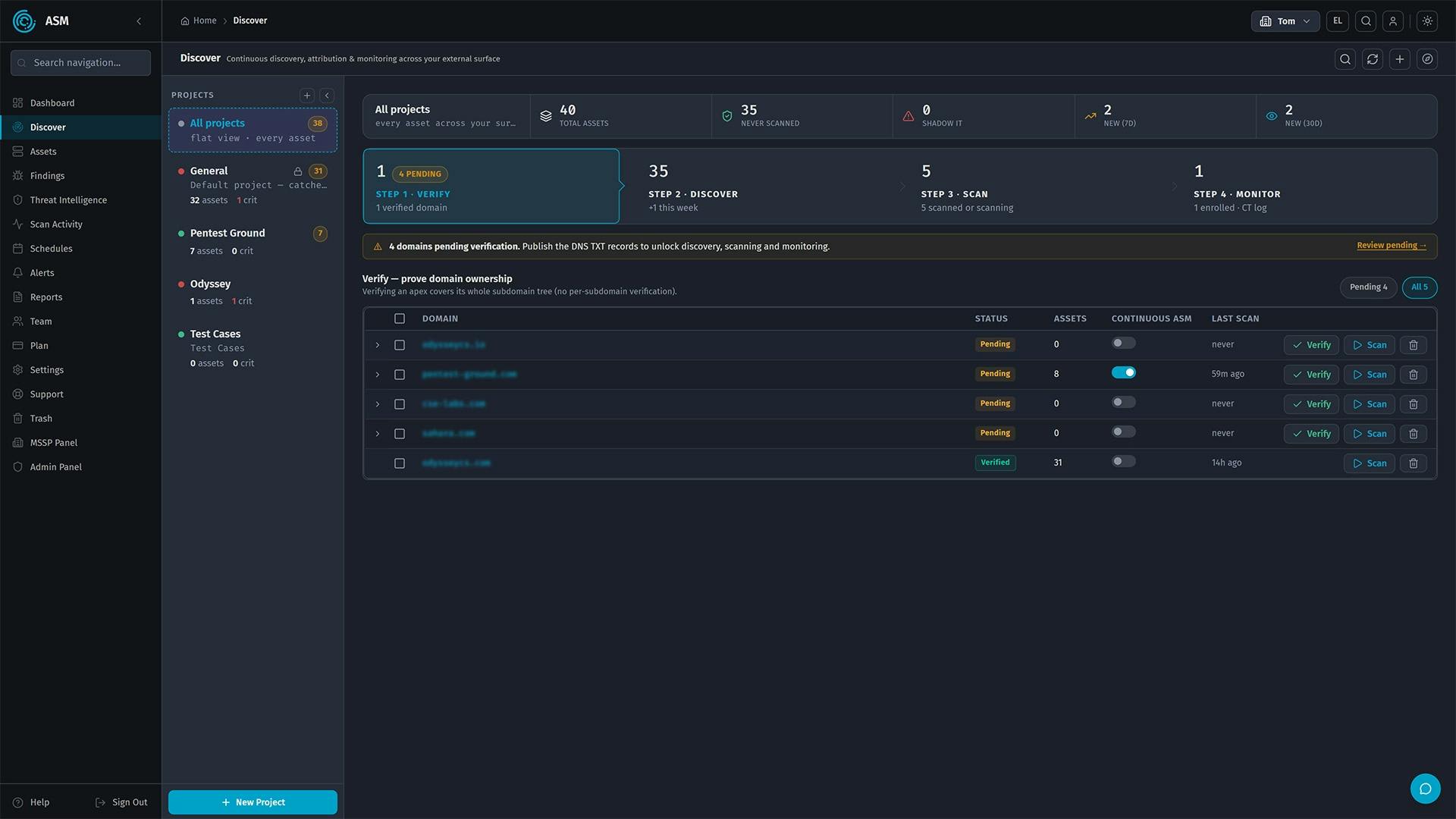
Several independent signals are scored into one confidence number, and the band that number lands in decides what the platform is permitted to do next. A service that treats resemblance as ownership has to choose between probing infrastructure that is not the customer’s and under-covering the real one. Evidence-scored attribution removes that choice, and it is what lets a finding be defended in front of a board.
Prioritize What Attackers Are Most Likely to Exploit
CVSS says how bad an issue would be. EPSS says how likely anyone is to use it, and the CISA KEV catalog says whether they already are. Reading all three against the business context of the asset produces an order of work, where a raw severity dump produces a backlog.
Bring First-Party, Third-Party and Dark Web Risk Into One View
Credential leaks, brand abuse, access-broker listings, vendor posture and shipped software components are scored on the same severity and confidence bands as first-party findings and land in the same queue. Elsewhere these are separate subscriptions, separate dashboards and separate scoring models, which is how a supplier problem ends up outside the risk register.
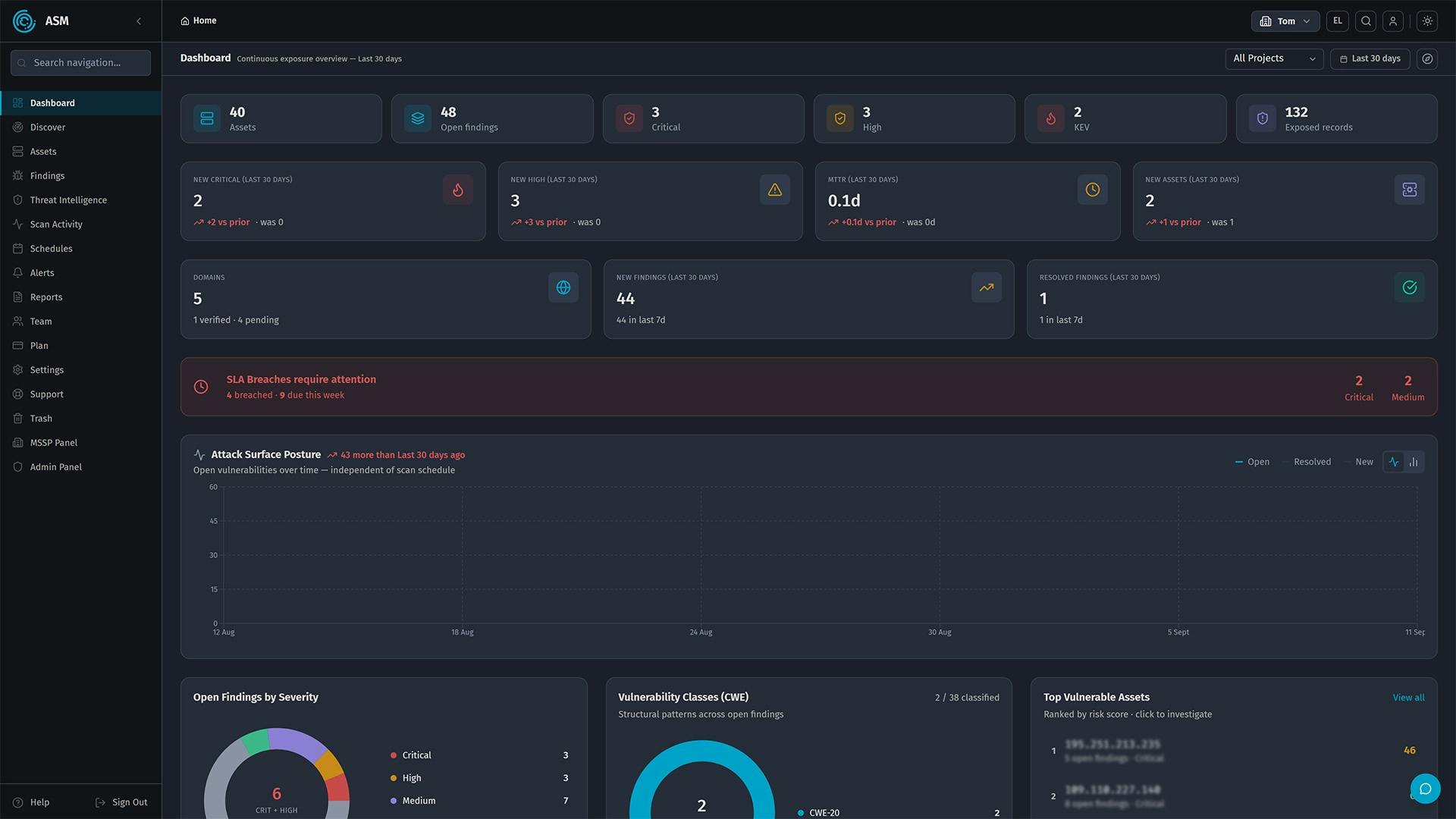
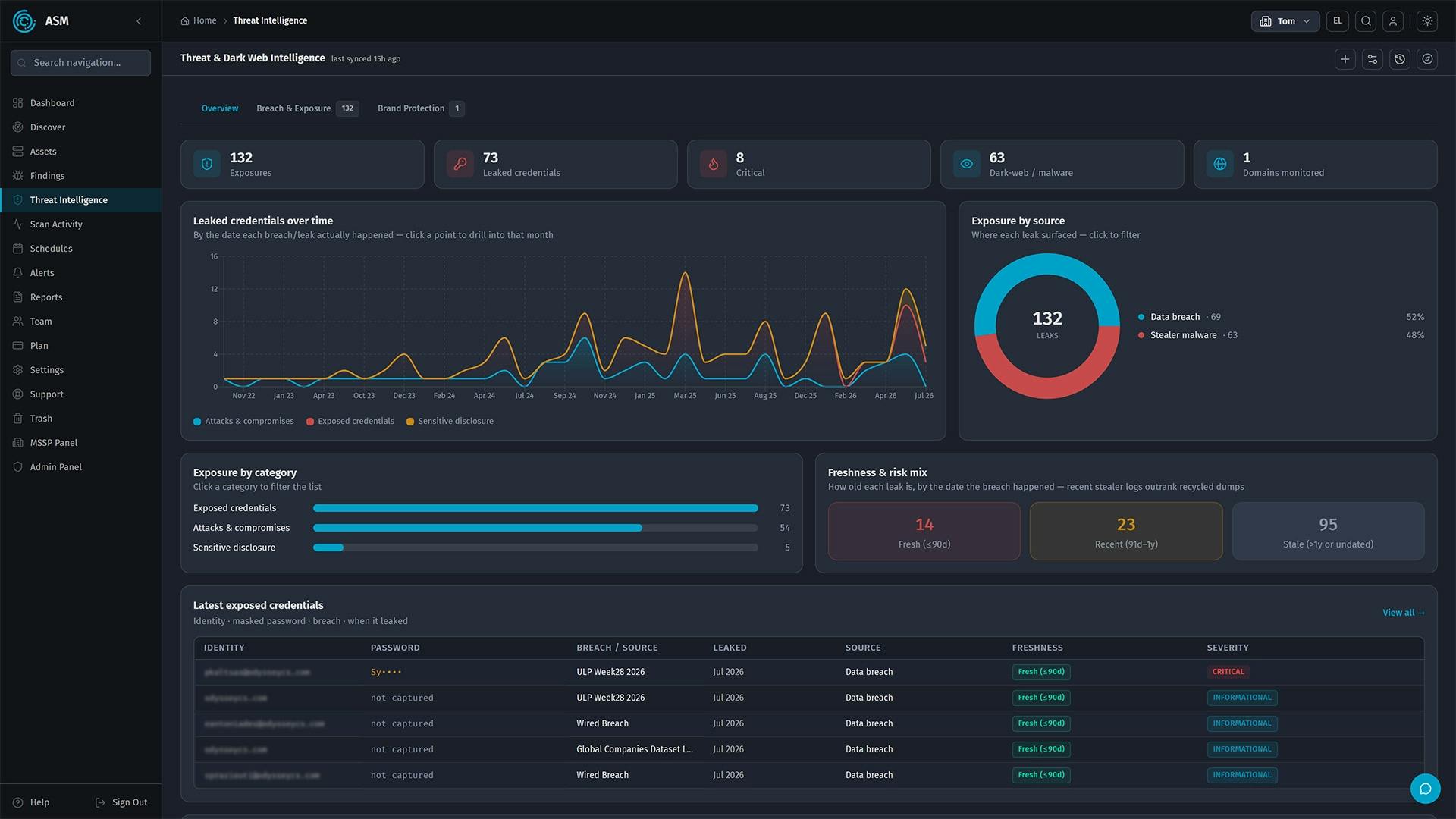
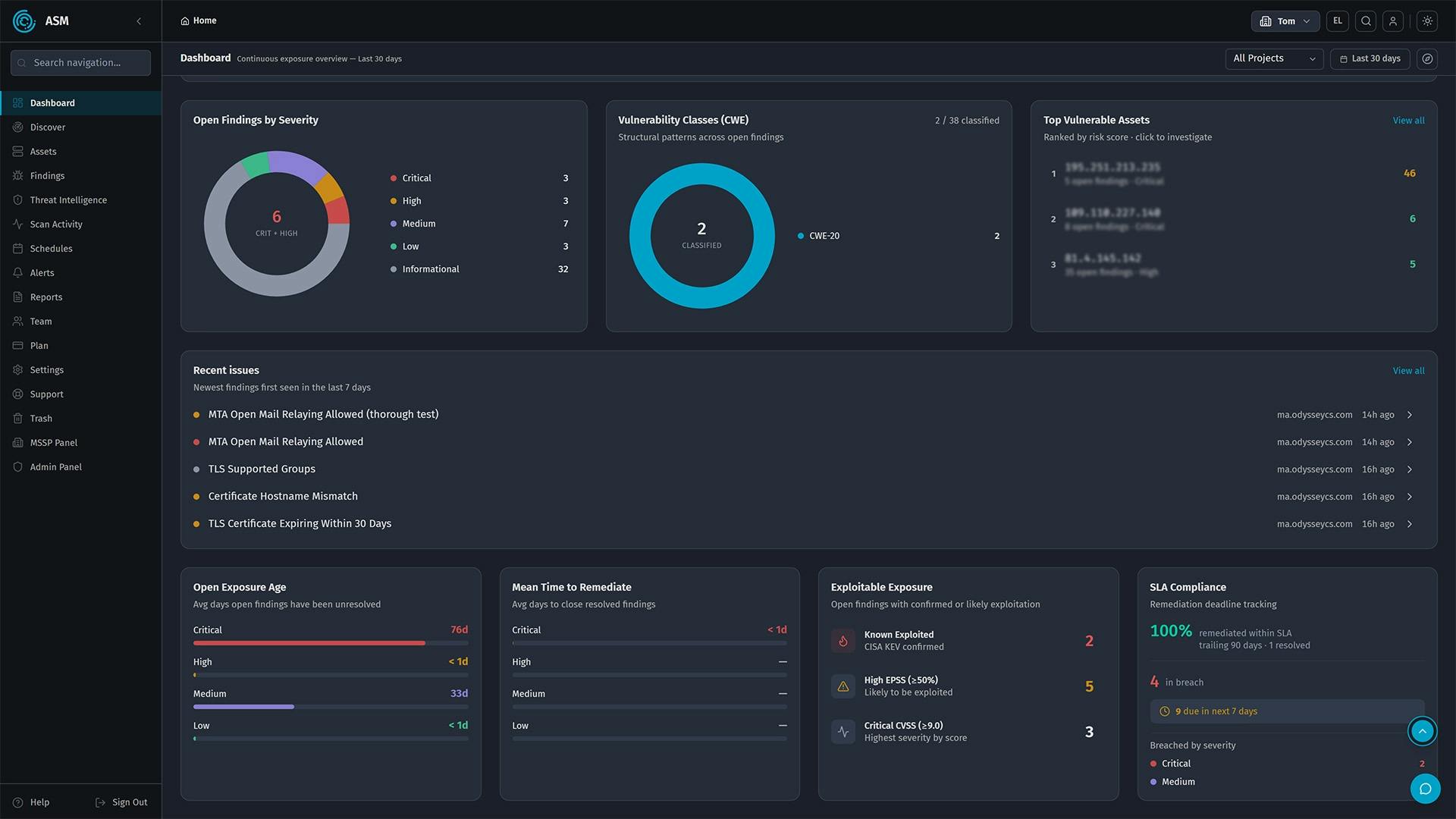




All four hold whether ClearSkies ASM is bought standalone or licensed as a native add-on.
Inside the platform it carries a fifth that no standalone exposure product can: the finding enters a correlation engine rather than a console, joined to identity, endpoint and DNS signals against a schema shared before the finding arrived, and pre-investigated before a human sees it.
Coverage That Scales With Your Attack Surface
ClearSkies ASM is licensed on in-scope sub-domains monitored under the authorized root domains, rather than on log volume or seat count. The customer names the root domains, the platform discovers and attributes across exactly that surface, and the sub-domain count is the honest measure of what is being watched, because it grows for the same reasons the attack surface grows. As the organization expands through new domains, acquisitions or wider cloud adoption, the in-scope count rises with it and the license adjusts in line with the actual cost of monitoring.
Dark web monitoring is not a second subscription: it is included per authorized root domain, so adding a root domain to scope extends underground coverage automatically. Licensing runs on a fixed term of three months, six months or one year.
- Root domain based
- In-scope subdomains included
- Dark web monitoring included
- Fixed term: 3, 6 or 12 months
One Platform. Every Customer Surface.
For managed security service providers the model is one platform deployment serving many end customers. Providers buy a pool of sub-domains sized to a bundle bracket rather than licensing one client at a time, and each bundle carries a matched dark web allowance. Sub-domains are reallocated within the pool as customers are signed or lost. Margin is protected through deal registration, and white labeling and approved-subprocessor status are included.
Go to the MSSP platform
The Questions Security Teams Ask First
We already run vulnerability scanning.
An authenticated scanner covers what is already recorded, and a network scanner covers what is reachable from inside. Neither reaches an asset nobody registered, which is where most intrusions begin.
How do we know the platform will not scan something that is not ours?
Active assessment is restricted to the confirmed band, at 70 and above on an evidence-scored model. Suspicious assets are observed passively and never probed, and every promotion and discard is recorded with its reasoning.
We ran an exposure pilot before and it produced too many false positives.
In this category those are almost always attribution errors rather than detection errors: shared addresses, parked domains and hosting ranges swept in by resemblance. That is the problem ClearSkies ASM is built around, and the first confirmed scan is run as an attribution review so the evidence model is visible before any finding reaches a report.
Most of our infrastructure is industrial and no tool can see inside it.
ClearSkies ASM does not run inside the OT segment and does not need to. It works the boundary: the internet-facing jump hosts, remote-access services and engineering workstations an attacker would use to reach control systems, discovered without installing anything. Coverage of the operational infrastructure itself is integration-based.
See Your Own Attack Surface in 15 Days
Discovery and assessment run against your own root domains before any commitment, so the first thing you see is your own inventory rather than a demonstration environment.
Book a demo